
Researchers at the University of California, Santa Barbara have developed a working prototype of a tactile display that can make pixels literally rise off the screen. The project, titled Tactile Displays Driven by Projected Light, reimagines what a digital display can be – one that’s not only visible, but physically touchable.
The display’s surface contains hundreds of optotactile pixels, which are tiny air-filled chambers sealed beneath a thin, elastic membrane. Each chamber includes a strip of graphite that absorbs laser light. When the laser hits, the trapped gas rapidly heats and expands, pushing the surface upward by about a millimeter. At the same time, the pixel lights up, producing an image that can be both seen and felt in real time.
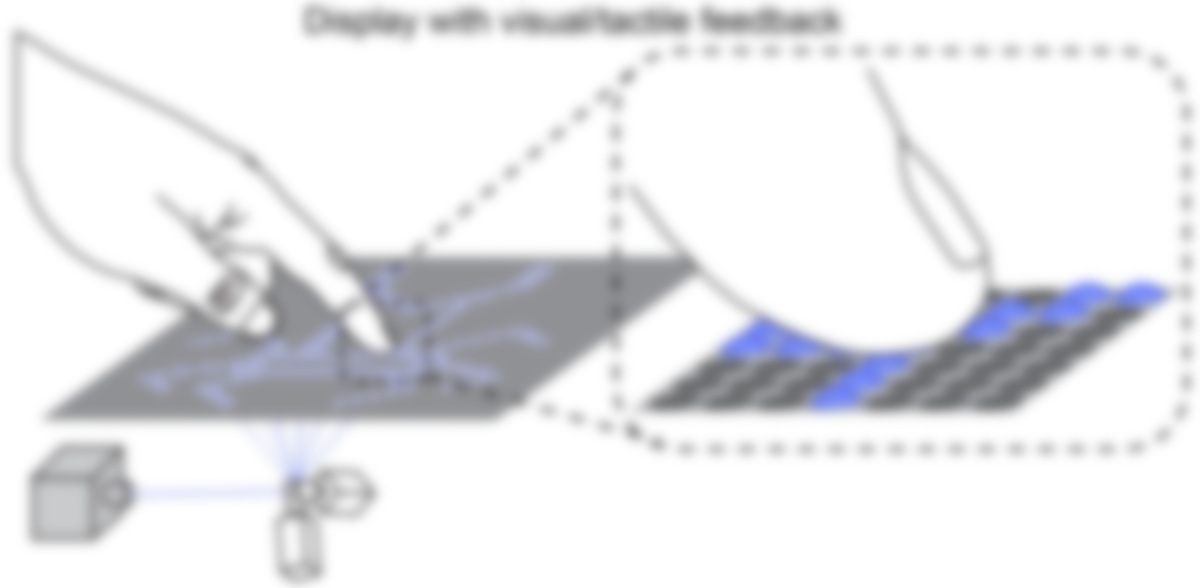
Lead author and researcher Max Linnander explains the concept simply: “We present a dynamic tactile display that converts projected light directly into visible and tactile patterns. Our system uses arrays of individually controllable surface elements – tactile pixels – to represent spatial structures, temporal changes, and movement. It essentially makes optical signals tangible.”
The UCSB prototype currently houses 1,511 addressable pixels across a 15-by-15-centimeter (roughly six inches) panel – several times larger than most tactile-display experiments to date. Early testing showed participants could sense shapes, rotations, and movement patterns with up to 93–100 percent accuracy, while pinpointing individual raised pixels with roughly 78 percent success.
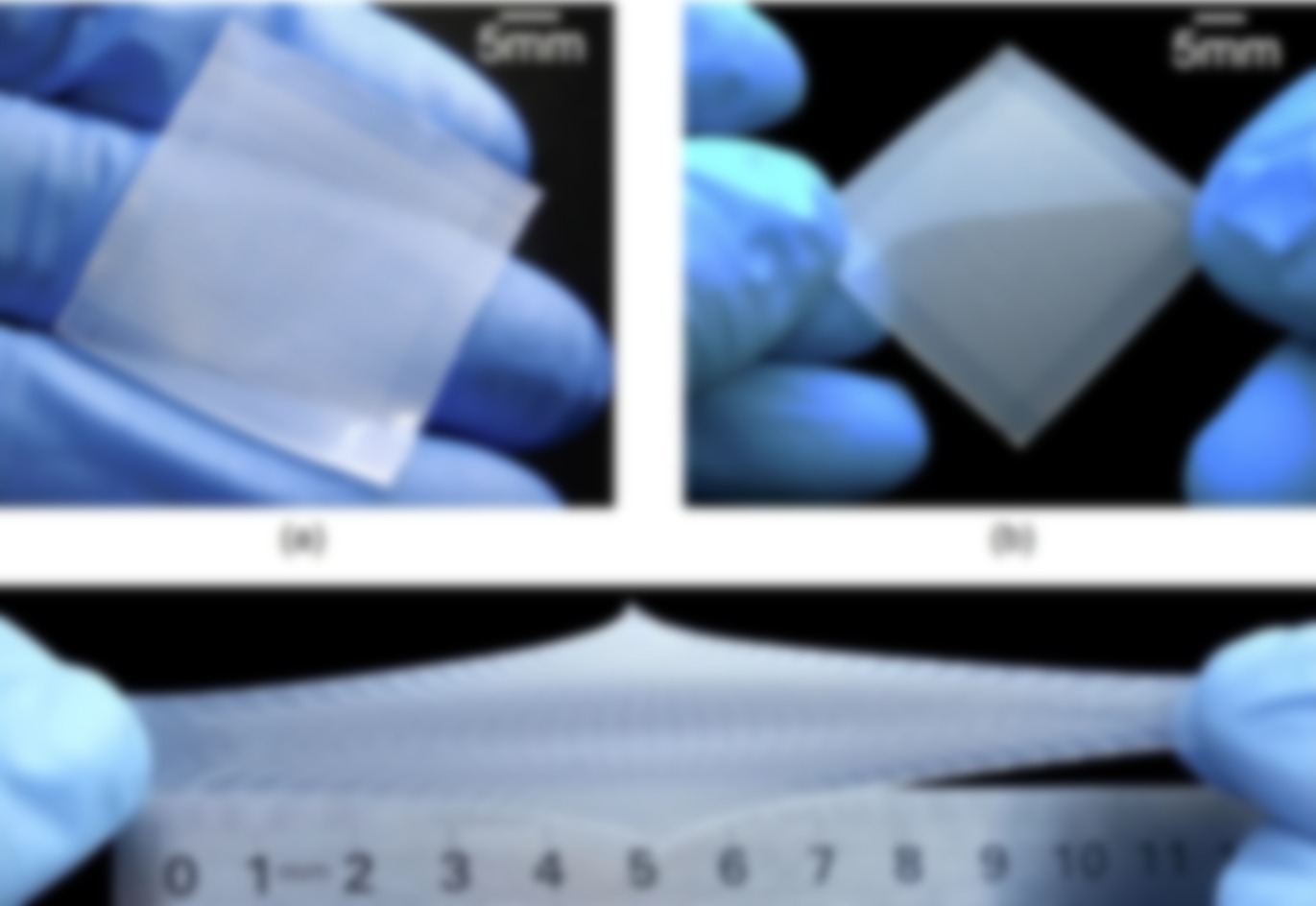
While traditional screens rely solely on visuals and touchscreens provide only vibration feedback, this system creates true surface deformation, allowing users to “grasp” what’s displayed. The researchers say it could pave the way for interactive interfaces, virtual and augmented-reality experiences, accessible displays, and advanced control panels.
Since the technology uses projected light for both power and addressing, it avoids the dense wiring that limits previous tactile systems and could, in theory, scale to larger or higher-resolution applications. Still, the team acknowledges that the prototype remains early-stage: improving refresh rates, durability, and manufacturability are key next steps before it can move beyond the lab.
The full paper is available for download on arXiv and published in Science Robotics (DOI: 10.1126/scirobotics.adv1383). Additional materials and demonstration videos can be found via UCSB’s RE Touch Lab.
(Images: UCSB RE Touch Lab / University of California, Santa Barbara)