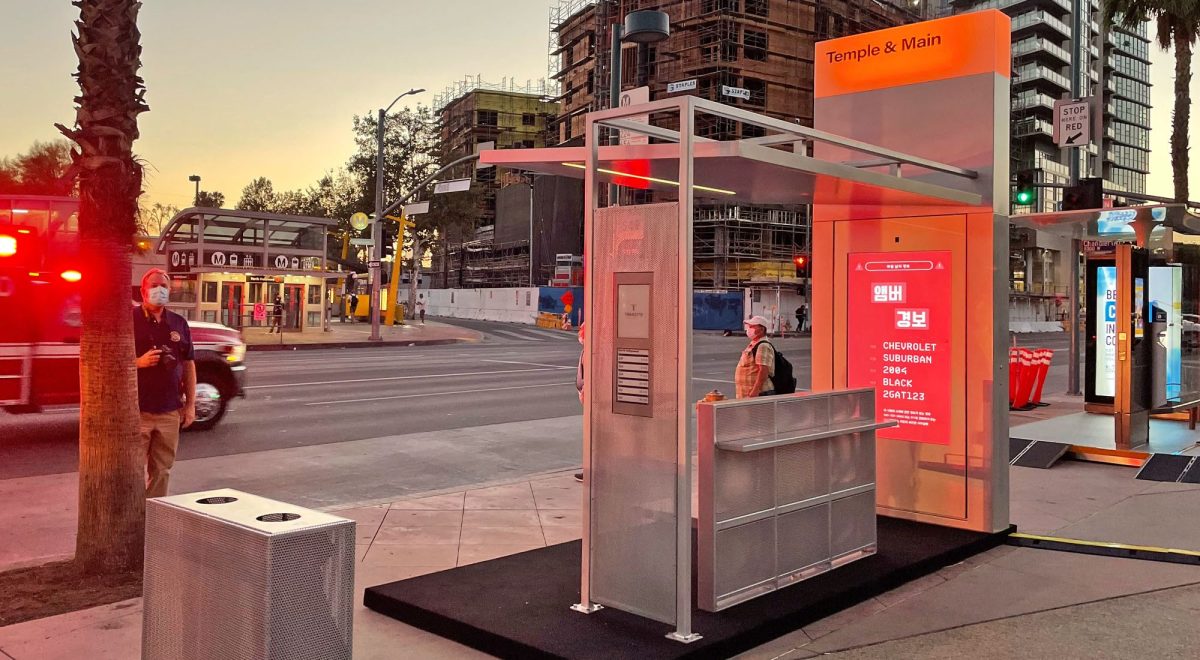
A proposal to add some 3,450 new tech-laden transit shelters to LA’s streets has cleared a big hurdle for its backers, but still needs to get the final OK from the full Los Angeles City Council.
LA’s public works board has approved a plan from a partnership called Tranzito-Vector to add the shelters to the 8,000 or so already on the streets – but these new ones will have solar collector arrays on the canopies, e-paper transit update screens, phone charging, digital lockers and e-scooter docks. As is often the case, what’s not being welcomed is the big DOOH ad display integrated into the shelter’s design. It’s that screen that effectively pays for the infrastructure, and spins off as much as $10M in new revenue for the city over 10 years.
The unassuming pieces of street furniture took center stage at a joint meeting of the Los Angeles City Council’s Public Works and Budget and Finance committees Wednesday. At issue: new, expanded high-tech features, digital ads and an accelerated schedule for building bus shelters that have been thwarted over the last 20 years by what some advocates consider excessive NIMBYism.
In the end, the joint committee approved a new Sidewalk and Transit Amenities Program (STAP). The program will grant a new contract — meant to add 3,000 new bus shelters to the city’s 8,000-plus bus stops over the next 10 years — and has sparked both public backlash and support. It now moves to the full City Council for a vote.
In May, the Board of Public Works selected Tranzito-Vector as the new private partner for the STAP. The company is a joint venture between Tranzito, a Bay Area micromobility startup, and Vector, an outdoor advertising company.
If the program is approved, the new shelters will have high-tech features like e-paper displays, phone charging, digital lockers and even e-scooter docks. But the main point of contention for opponents to the contract is the addition of digital ads.
While the city says that the new ads will bring significant funds to the city — up to $400 million over 10 years (with $90 million guaranteed) — opponents say that the ads will blight city streets and distract drivers. Some advocates for the new contract argue that concern over digital advertising is a red herring from people who don’t use public transportation and are not concerned for bus riders.
Contrary to popular belief, L.A. County’s transit agency, Metro, does not control where bus shelters are placed. Rather, that responsibility falls on representatives from each individual council district.
One of the interesting components of the proposed shelters is how the shelter screens will include earthquake early warning systems, including notifications from NotifyLA and ShakeAlert.
As is noted in the comments below, these kinds of projects are capital-intensive and subject to a lot of attrition from sunlight and its heat, as well as the mischief of the general public. And revenue estimates don’t often turn out to be actuals.