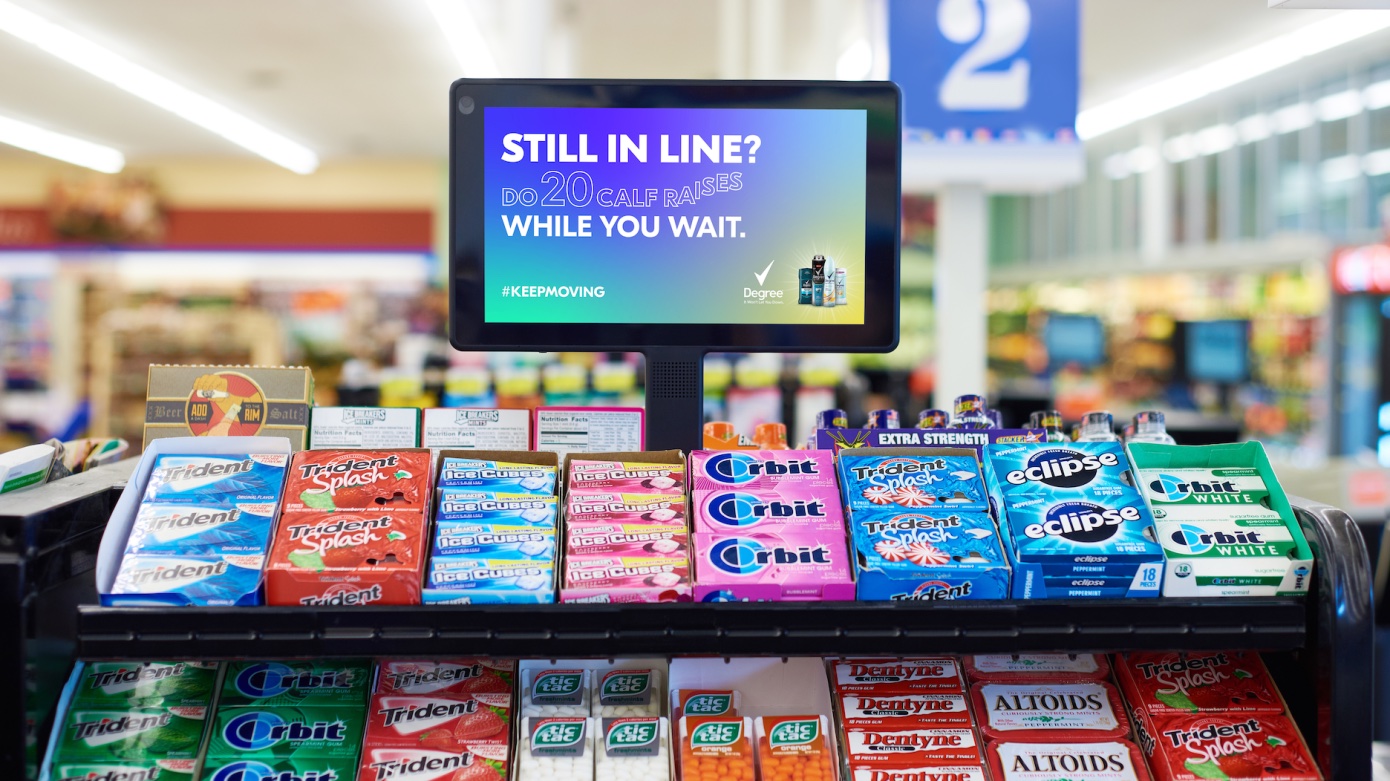
The screens in the checkout lane retail media model mostly escapes me, because consumers are pretty much done shopping at that point, but an Austin, Texas-based firm has nonetheless secured $30M in new investment funding to continue building out its retail digital signage network, called Grocery TV.
The new money is on top of $5 million put into the company, called Clerk, a couple of years ago by outside investors. The new $30M comes from Silicon Valley’s Sageview Capital.
Six-year-old Clerk does retail technology and describes its activities this way: “Clerk’s smart checkout displays (Grocery TV) combine video advertising with a product management platform to better capture the mind and wallet share of U.S. consumers who spend nearly 90% of their grocery dollars in physical stores. With actionable reports and access to both current and historical performance, brands and retailers can make data-driven decisions that deliver immediate, impactful value.”
The screens, mounted atop checkout lane half-height shelves filled with impulse buy goods like candy bars, are now in 2,700 stores and all 50 U.S. states. A looming roll-out will push that number over 3,000. The average is five screens per store.
Grocery TV has partnerships with programmatic ad platforms like The Trade Desk and Yahoo DSP, and the umbrella pitch is that these screens put brand marketing to drive purchases in front of some 30M consumers.
I don’t think VCs write eight-figure checks without a bit of due diligence (then again, watch WeCrashed), so the DOOH ad sales revenues are presumably showing this model works in ways it has not in the past 20 years. Earlier grocery networks have tried versions of this and it has not tended to end well. But one BIG thing on the side of this now is the cost of display and media play-out hardware is way, way less than it used to be, and connectivity is cheaper and easier to get. Add on programmatic ad sales that wasn’t around, really, even a decade ago, and maybe this is profitable?
What I generally hear and see from other people in retail is that the demand for screens in places like grocery and big boxes is small and at the shelf-edge, at the end-caps and along aisles. The Grocery TV is an aisle, too – kinda sorta – but can only try to drive impulse buys on a small percentage of stocked items like gums, chocolates, batteries and lip balms sold up front. I wonder how many people would see an ad for, let’s say, organic Sicilian olive oil, back out of the checkout line and head back into the store. So the assortments sold at the front is probably the main media planning target, and maybe that’s enough???
The add-on argument might be that if you have a technology footprint at the front of 3,000 grocery stores, expanding to the end-caps and in-aisle shelves is relatively easy because the relationship, contracts and some of the tech are already in place.