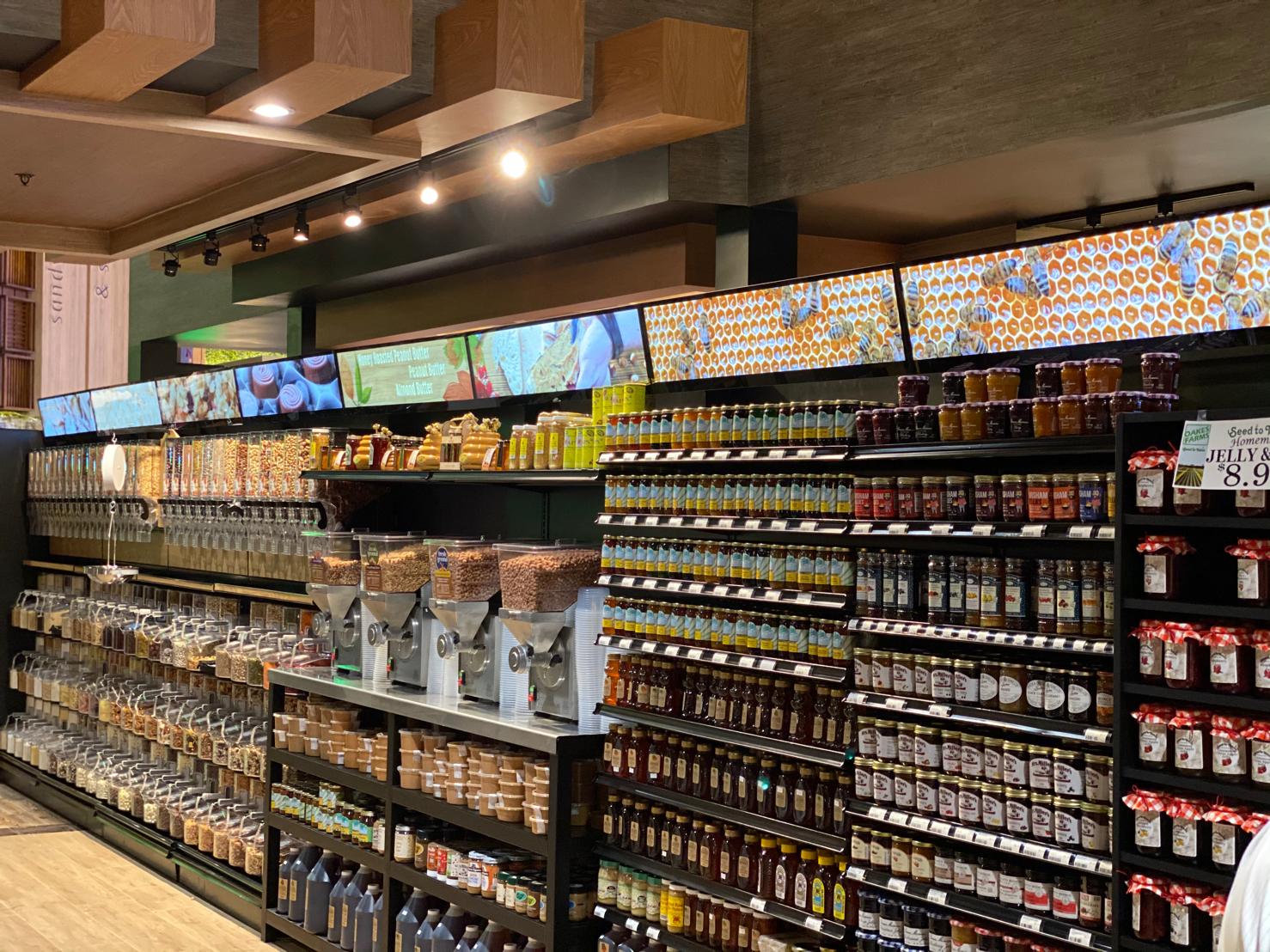
A new grocery in Naples, Florida – heavily focused on locally grown and sourced product – has more than 100 screens deployed around the floorplate.
Arguably the most visually compelling component – from what I can see in videos and still images – is one set of stocked shelves that has 32 feet of LCD headers and 64 feet of shelf displays that have dynamic price tags.
There are also standard, stretch and even square displays embedded into the design of the just-opened “Seed To Table” store.
The screens are a mix of Instore Screen‘s own shelf-focused product, as well as larger Samsung’s. The screens are driven by LENOVO PCs and Real Digital Media’s NEOCAST CMS manages all the content.
You are currently viewing a placeholder content from Default. To access the actual content, click the button below. Please note that doing so will share data with third-party providers.
More InformationLCD and LED shelf headers and merchandising strips have been on the trade show circuit for several years, but we’re now seeing real-world deployments. Instore, which is Florida-based but has manufacturing in China, also has screens in Whole Foods.
I tend to like the LCD product a lot more than LED, at least for now. When you get into things like the ribbons that front shelfs and do double-duty as promotions and pricing, readability is essential. Only the tightest pixel pitch LED can show things like text and pricing figures in a way you could loosely call crisp, whereas it’s easy with LCD.
It also helps that display manufacturers – such as AUO – are now making LCDs natively in these ribbon and strip shapes, which means no cutting and reworking of larger displays. The old approach added cost and complexity, and reduced reliability.