I was on a call recently with a guy from one of the more well-established companies in the digital signage software market, and as we wrapped up, he of course asked what I thought.
Really good, as expected, I said, but maybe the device management was a little threadbare compared to some others I’d seen.
That threw him off, so I went on to explain how for years I’ve seen systems that allow operators to get down to the most granular level to see what’s happening in the field. At Digital View, where I worked several years ago, the software was written with the idea that the networked players were Mars explorers – so you needed all kinds of remote diagnostics and tools to monitor and fix them remotely, because that’s a field service trip you were not going to make.
I took that approach to heart, and remote device monitoring and management remains one of the biggest filters I use when I am helping clients sort through the scores of competing software offers out there. If your platform can’t give you much of an idea of what’s happening with the devices in the field, or provide ways to easily get at those devices and remedy issues, you’re not really in the game.
Vendors also seem to be taking this to heart – possibly because the user base is getting smarter and some buyers are now into network refresh cycles, having already had three to five years with one platform and now really understanding what’s important.
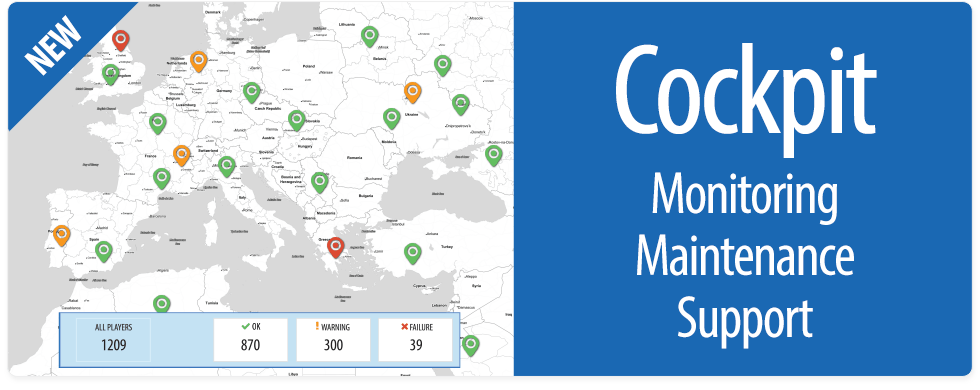
Just this week we’ve seen Signagelive debut its visual dashboard, and the Swiss firm SpinetiX has announced something called Cockpit, which is all about device management.
Drag and drop user interfaces and pretty icons are all very nice, but I’d take a butt-ugly management tool over a design-centric platform that doesn’t do a hell of a lot beyond scheduling and distribution.