Any media coverage having to do with face pattern detection and advertising – like what Quividi does – seems to invariably prompt tired old references to the 2002 film Minority Report.
Never mind that the technology is nothing like that. It’s in the same popular culture hemisphere, so use it. Fine. Got it. Used to it. Whatever. Then when these stories run in gadget blogs and in the general media, they provoke all kinds of indignation over privacy invasion. Again, that’s the well-worn pattern.
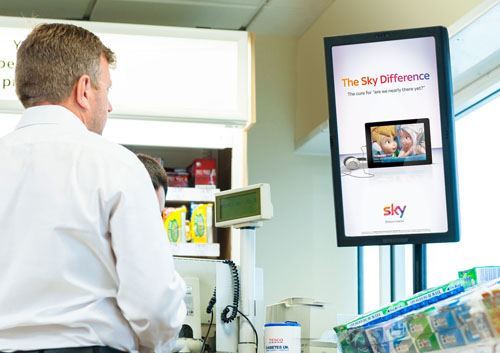
So all I can do is shake my head and wonder what went through the head of Amscreen CEO Simon Sugar when he did an interview recently about a face pattern detection thing called OptimEyes going into Tesco petrol stations. “Yes, it’s like something out of Minority Report, but this could could change the face of British retail, and our plans are to expand the screens into as many supermarkets as possible.”
Oh, Lord.
Look up the Amscreen hash tag on Twitter and see how delighted the British public are with what they now think is an invasion of their privacy.
https://twitter.com/the_pedaller/status/397424807609778176
You are currently viewing a placeholder content from Default. To access the actual content, click the button below. Please note that doing so will share data with third-party providers.
Sugar is now tweeting away to clarify.
You are currently viewing a placeholder content from Default. To access the actual content, click the button below. Please note that doing so will share data with third-party providers.
As Sugar notes, it’s not facial recognition. It’s facial pattern detection. ALL this tech does is look for and count what it understands to be faces, based on geometry. It can take a crack at also estimating gender and age range, and present data that could allow an ad to be served based on the idea that a young male is looking at that moment.
It might have just been an “Oops, I shouldn’t have said that,” but Jeez. I suppose you could also argue even this kind of attention is, nonetheless, attention.